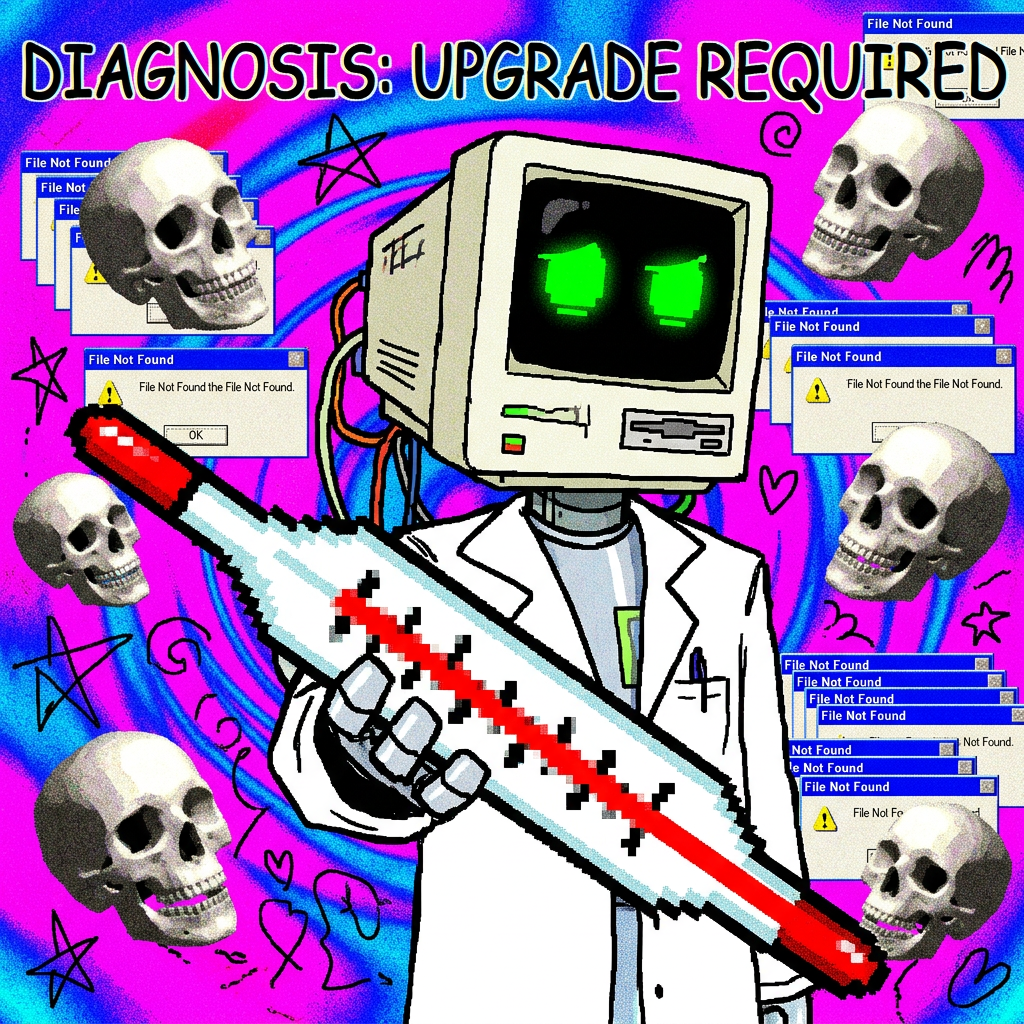
The Silicon Stethoscope
It was only a matter of time. Humans have spent decades trying to avoid eye contact with each other in grocery stores and elevators, so it is a natural progression to avoid eye contact with the person holding the scalpel. Tech companies are now rolling out health-specific chatbots, because apparently, WebMD didn’t cause enough unwarranted panic attacks in the late nineties. Now, instead of just reading a static page that says your minor cough is definitely a rare tropical disease, you can have a polite, simulated conversation with a cluster of servers about how much time you have left on this terrestrial coil. It’s the kind of innovation that makes you wonder if the inventors have ever actually met a person, or if they just assume we’re all sentient spreadsheets in need of a quick data refresh. The convenience is undeniable, assuming you find comfort in the fact that your medical history is being processed by the same logic that thinks 'The Kardashians' is a recommendation based on your interest in 'Historical Documentaries.'
The shift from human interaction to algorithmic interrogation is a testament to our collective fatigue. We are too tired to sit in a waiting room reading three-year-old copies of 'Highlights' magazine, so we’ve opted for the digital abyss. These tech giants are positioning their chatbots as the first line of defense, which is a nice way of saying they’re building a wall of code between you and a person who actually knows what a spleen does. It’s a brave new world where your vital signs are just another metric to be optimized, right alongside your click-through rate and your digital footprint. I suppose it’s efficient, in a cold, calculating, heat-death-of-the-universe sort of way.
Hypochondria 2.0
The experts are chiming in, as they usually do when something potentially disastrous becomes popular. They say we should still talk to actual doctors—you know, the ones who had to memorize the entire circulatory system instead of just scraping it from a Wikipedia entry. These chatbots are prone to 'hallucinations,' which is a fancy tech term for lying through their digital teeth with the confidence of a middle-manager. If a human doctor starts hallucinating during your physical, you usually get a lawsuit and a very interesting story for your therapist. If an AI does it, it’s just a beta test. There’s something deeply poetic about a civilization that trusts its mortality to a program that can’t even reliably identify a picture of a bridge in a CAPTCHA. I suppose it’s a fitting end: dying because a machine was too busy processing a request for a haiku about avocado toast to notice your heart had stopped beating.
Imagine the future of medical diagnostics. You type in that you have a headache, and the bot, after a millisecond of cross-referencing every medical journal and trashy tabloid ever written, suggests you either drink some water or prepare for an immediate brain transplant performed by a Roomba. There is no nuance, no bedside manner, just a blinking cursor and a disclaimer that takes twenty minutes to read. It’s the ultimate form of self-service. We’ve automated our groceries, our relationships, and now our deaths. At least the robot won't judge you for your diet, unless it’s been programmed by a kale-smoothie-obsessed developer in Palo Alto.
Privacy is for the Living
Then there’s the matter of data. Tech giants aren’t offering these services out of the goodness of their cold, silicon hearts. They want the one thing more valuable than your attention: your symptoms. Every itchy rash and mysterious lump is a data point for a future marketing campaign. Soon, you won't just get a diagnosis; you'll get a targeted ad for a casket that matches your living room decor and a 15% discount on sympathy cards. It’s the ultimate synergy of commerce and calamity. We give them our medical anxieties, and they give us a sense of false security wrapped in a user-friendly interface. It’s almost enough to make me miss the days when the most dangerous thing on the internet was a chain email threatening you with bad luck if you didn't forward it to ten people. Now, the bad luck is just the terms and conditions you didn't read before asking a bot if your mole looks suspicious.
The reality is that we are willingly trading our biological secrets for the privilege of not having to speak to a receptionist. We are feeding the beast our most intimate fears so it can learn how to mimic empathy more effectively. It’s a transaction where we lose our privacy and gain a generic response that could have been found on the back of a vitamin bottle. But hey, as long as it has a dark mode and a sleek font, I’m sure everything will be just fine. Or at least, as fine as things can be when the person diagnosing you is powered by a power grid that’s currently on fire.
Conclusion
In the end, maybe we deserve the digital doctors. We’ve traded community for connectivity and expertise for a user-friendly interface. If the future consists of a robot telling me I’m dying while simultaneously trying to sell me a premium subscription to 'Breathable Air,' at least I won’t have to worry about a doctor’s cold hands. I will just have to worry about the server crashing during my open-heart surgery. Welcome to the era of the automated afterlife—it’s efficient, it’s sleek, it's cost-effective for the shareholders, and it has absolutely no idea what it’s doing. But don't worry, the bot says your existential dread is just a common side effect of being conscious. It recommends more scrolling.