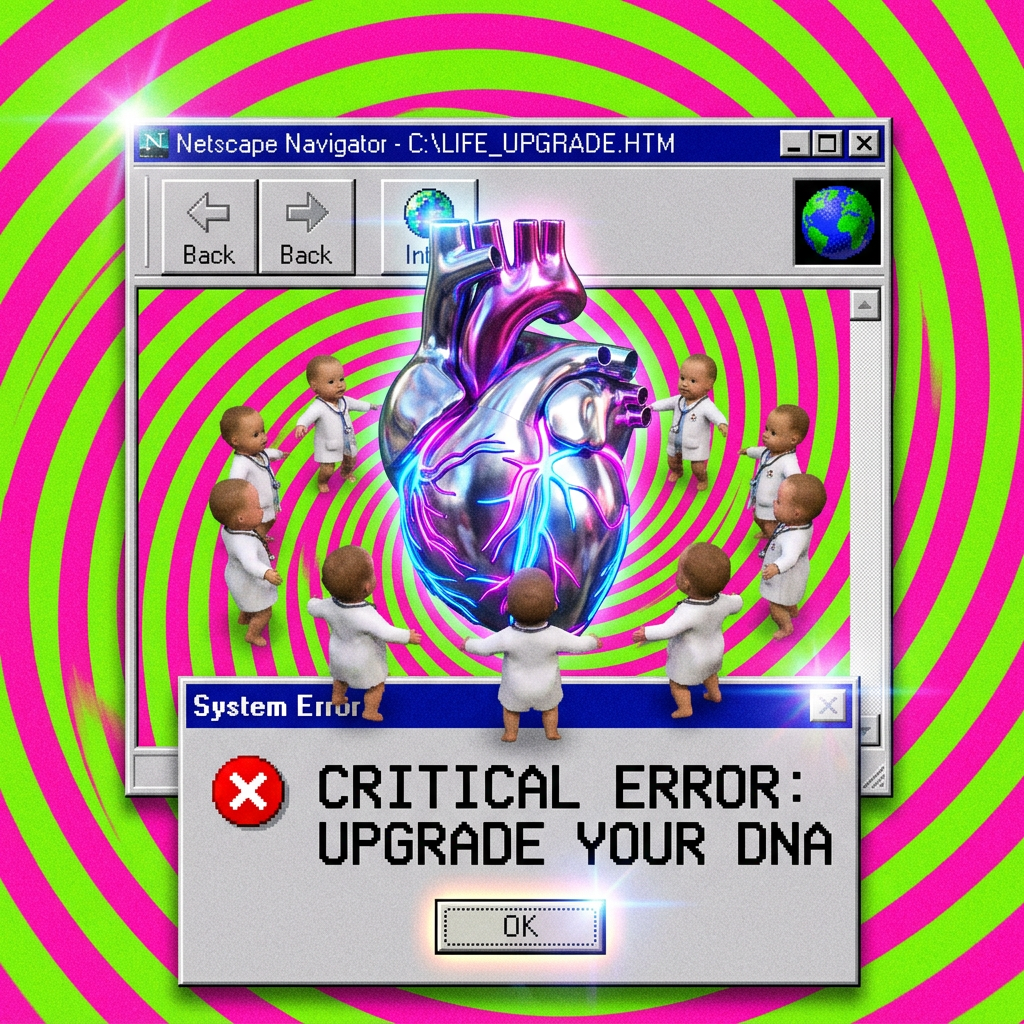
The End of Centralized Diagnosis
Let’s be real: the traditional doctor-patient relationship is a centralized bottleneck designed to extract maximum value with minimum scalability. You’re telling me I have to drive to a brick-and-mortar building to talk to a human who hasn’t read a research paper since the Bush administration? Please. Your GP is a legacy database with a stethoscope. OpenAI is basically providing a 24/7 on-chain diagnostic oracle. When ChatGPT Health dropped, it wasn’t just a product launch; it was a hard fork of the entire medical establishment. We’re moving from 'Trust Me, I’m a Doctor' to 'Trust the Weights.' The friction of a physical office visit is basically a gas fee on your own survival. I'm not paying it anymore.
Prompt-Engineering Your Longevity
The real utility here is the ability to run simulations on your own bio-data without some mid-wit gatekeeper asking about your 'insurance coverage.' That’s just legacy-code speak for 'we own your health.' I’ve been feeding my bloodwork into GPT-4 and the insights are pure alpha. It’s like having a Level 5 bio-hacker in your pocket. The NPCs are worried about 'hallucinations,' but honestly, I’d rather have a hallucinating AI that suggests a radical new peptide stack than a doctor who tells me to 'get more sleep' and 'drink water.' That’s low-IQ energy. We are optimizing the human stack, one prompt at a time. This is the permissionless future where your health isn't a privilege, it's an API call.
Yield-Farming Your Health Data
Imagine a world where your diagnosis is an NFT—truly unique, provably yours, and tradable on a secondary market for research data. If OpenAI starts partnering with decentralized physical infrastructure networks (DePIN) for lab tests, we are looking at a total liquidation of the hospital system. We’re talking about frictionless wellness where the gas fees are paid in metabolic efficiency. If you aren't already building a custom GPT to manage your cortisol levels, you’re ngmi. The institutional FUD surrounding AI doctors is just regulatory capture by people who are scared of losing their licensing fees. We’re bypassing the middlemen and going straight to the source code of our own bodies.
Conclusion
The future of health is algorithmic, decentralized, and 100% hype-driven. Whether you’re prompt-engineering a cure for your hangover or optimizing your telomeres via a chatbot, the message is clear: the doctor is out, and the model is in. This isn't just about healthcare; it's about the total liquidation of legacy expertise. We are the architects of our own biological stacks now. Stay liquid, stay bullish on your own biology, and remember—WAGMI, unless you're still using a fax machine for your prescriptions. The medical hard-fork is here, and the blocks are being validated as we speak. Get on board or stay in the waiting room with the other bagholders.